
When hurricane season actually matters for a move
NOAA's official season for the Atlantic starts June 1 and ends November 30. That is half the year, which is why so many people planning a summer move ask whether they should just wait for December.
Most of that window is not hurricane weather. June and July usually mean heat and a thunderstorm around three in the afternoon. NOAA calls August through October the peak months, and it marks September 10 as the statistical peak of the season.
So a move in late June is a different conversation from a move in the second week of September. If your dates are flexible, the early and late edges of the season are easier to plan around. If the closing is set or the lease ends on the 30th, you can still move, with a backup date in your pocket.
Storms are usually tracked for days before they get near the coast, so it's rare to go to bed with a normal move date and wake up to a hurricane warning. That lead time is what makes a backup date useful.
One small thing helps all summer, storm or no storm. Ask for a morning start on a local move, so most of the loading is done before the afternoon rain rolls in off the Everglades.
What a watch or a warning does to your move date
The National Hurricane Center uses two words that people mix up. A watch means hurricane or tropical storm conditions are possible in your area. A warning means they are expected.
The NHC issues a hurricane watch about 48 hours before it expects tropical-storm-force winds, and a warning about 36 hours before. Its glossary of storm terms has the full definitions.
| What the forecast says | What it means | What to do about your move |
|---|---|---|
| Nothing named near Florida | Normal summer weather, afternoon storms | Keep your date. Ask for a morning start. |
| A storm days out, track still uncertain | Nothing official for your area yet | Call your mover, confirm the backup date, reconfirm your elevator time. |
| Watch | Storm conditions are possible | Expect a conversation about moving the date. Get any container off the driveway if your town requires it. |
| Warning | Storm conditions are expected | Plan on a new date. Keep packed boxes inside and off the floor. Follow county instructions. |
Many movers stop working once a warning covers the place you're leaving, the place you're going or the road in between. Each company sets its own rules, though, and a watch is where they differ most. Some keep working through a watch on a short local move, and others call it off early.
That is why the question belongs in your first phone call, not the week of the storm. Ask the mover how they decide, who calls whom, and how much notice you get.
Get a backup date and the deposit terms in writing
When you book a move in August or September, pick a second date at the same time, a few days after the first, and have it written on the estimate. It costs nothing to ask.
Palm Beach County backs you up here. Its consumer affairs office says a mover has to give you a written estimate, and a deposit can't be more than 20 percent of it. Those rules don't pause for storm season, so a backup date shouldn't come with a bigger deposit.
Before you book a move between June and November, ask: if a storm moves my date, what happens to my deposit, and is there a fee to reschedule? How soon after the storm can you fit me in? Get the answers on paper, next to the price.
The county page also says that without valuation coverage, a mover only has to pay 60 cents per pound for a lost or damaged item. That doesn't go far if a sofa gets soaked, so ask what your quote includes and what more coverage would cost.
Our quotes are free and come before you commit to a date. If your building or your new landlord wants a certificate of insurance, we send one on request.
Containers in a storm: the town rules people miss
Portable containers are sold on flexibility. You load on your own schedule and the company picks it up when you're ready. What the ads leave out is that your town may set the schedule for you.
Greenacres requires containers to be removed when a storm watch or warning goes up, and Highland Beach makes them leave town on a warning. The rules differ from town to town, so check yours before one lands in the driveway.
Picture the timing. A watch goes up, and you're calling the container company to pick up a half-packed box while half the coast is calling too. With a crew and a truck, loading happens on one set day, and there is no steel box left in the driveway to catch the wind.
Condo buildings during storm prep
If you live in a tower on A1A or a mid-rise in Boca or Delray, your building has its own storm routine. Florida law lets a condo board operate hurricane protection without asking every owner when it's needed to protect the property.
In practice, that can change your move day. Maintenance staff are busy with shutters, the service elevator may be tied up, and the loading area may be closed. Some buildings put moves on hold until the storm has passed.
None of that is the mover's call, and every building handles it differently. If a storm shows up in the forecast the week of your move, call your manager and reconfirm your elevator window. Ask whether the building wants a new certificate of insurance if the date changes.
The elevator booking stays between you and the building. Once you have your window, we plan the day around it, and the floors and doorways get covered before anything moves, whatever the month.
Packing for rain and humidity
A hurricane is the big worry, but the more likely problem on a summer move is ordinary rain and the damp that comes with it. Cardboard soaks up moisture. A box left overnight on a garage floor in August can be soft by morning.
A few habits help:
- Use plastic bins for papers, photos and anything you can't replace. Carry your important documents yourself, in a sealed bag.
- Stack boxes off the garage floor, on a shelf or a pallet, and away from the garage door where rain blows in.
- Pack in the last week or two, not a month ahead, so boxes spend less time sitting in the heat.
- Tape the top and bottom seams all the way across. Humidity loosens cheap tape.
- Put a mat and a couple of old towels by each door so wet shoes stay off the floors.
If the house you're leaving has storm shutters or panels, decide before move day whether they stay up or come down, and where the panels are stored. Crews need clear doorways, and the new owner will want to know where the hardware went.
On move day, our crew pads furniture and covers it in plastic wrap before it leaves the house. The walk from the front door to the truck is where a sudden shower does its damage, and the wrap helps keep upholstery and wood finishes dry on the way.
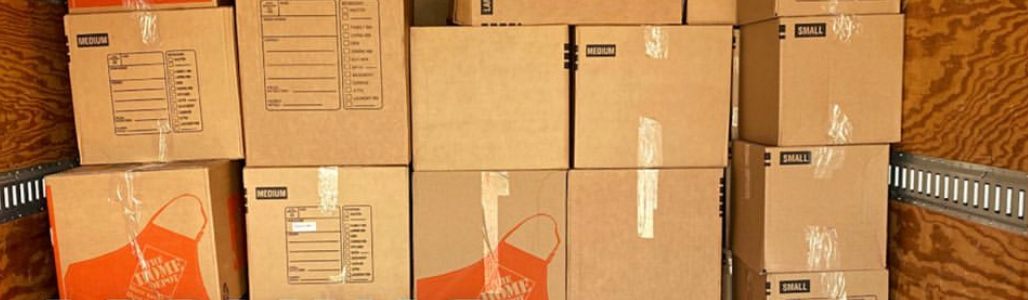
If you'd rather not pack at all, our packing and unpacking service handles the boxes at both ends.
Evacuation zones and the bridges to the barrier island
Before you sign a lease or close on a place, look up the address on the county's Know Your Zone page. An evacuation zone is an area that may be flooded by storm surge, and it's a separate lookup from your flood zone. Both are worth knowing for the home you're leaving and the one you're moving into.
If either address is on the barrier island, think about the bridges. Highland Beach, Ocean Ridge, Gulf Stream, Manalapan and Palm Beach are barrier-island towns, so reaching most addresses there from the mainland means crossing a bridge over the Intracoastal.
After a storm, the county or the town decides when people can go back, and the rules are set for each storm. Movers wait for that same green light. If your new place is on the island, your delivery depends on re-entry opening, not just on the sky clearing.
And if the county tells your zone to evacuate, go. A move date can be changed.
If a storm interrupts the move halfway
This is the case people lose sleep over. Half the house is on the truck when the forecast turns, and the new place isn't ready, or the building has stopped booking moves. You don't want your furniture riding out a storm in a truck or stacked in a garage.
Storage is the usual answer. A load can wait somewhere secure until the roads are open, the power is back and the building is taking moves again. That only works if it was planned before the storm, not arranged the afternoon a warning goes up.
So ask your mover, before you book, whether a loaded truck can go straight into storage if a storm hits mid-move, and what that adds to the bill. Ask us the same question on the first call, and read how our storage works. Seasonal residents face a related problem, a home sitting empty through the storm months, which we cover in the post on snowbird moves and seasonal storage.
Booking a move for next season
Classic Handling works out of Boynton Beach, on South Congress Ave. We're licensed and insured, and rated 4.8 on Google across 49 reviews.
If your move falls between June and November, bring your storm questions to the first call: the backup date, the deposit, the building, the storage. When you're ready, call (561) 570-0706 to start your free quote.